Friday, 10 August 2012

My Top 50: A Response To The Sight and Sound Poll

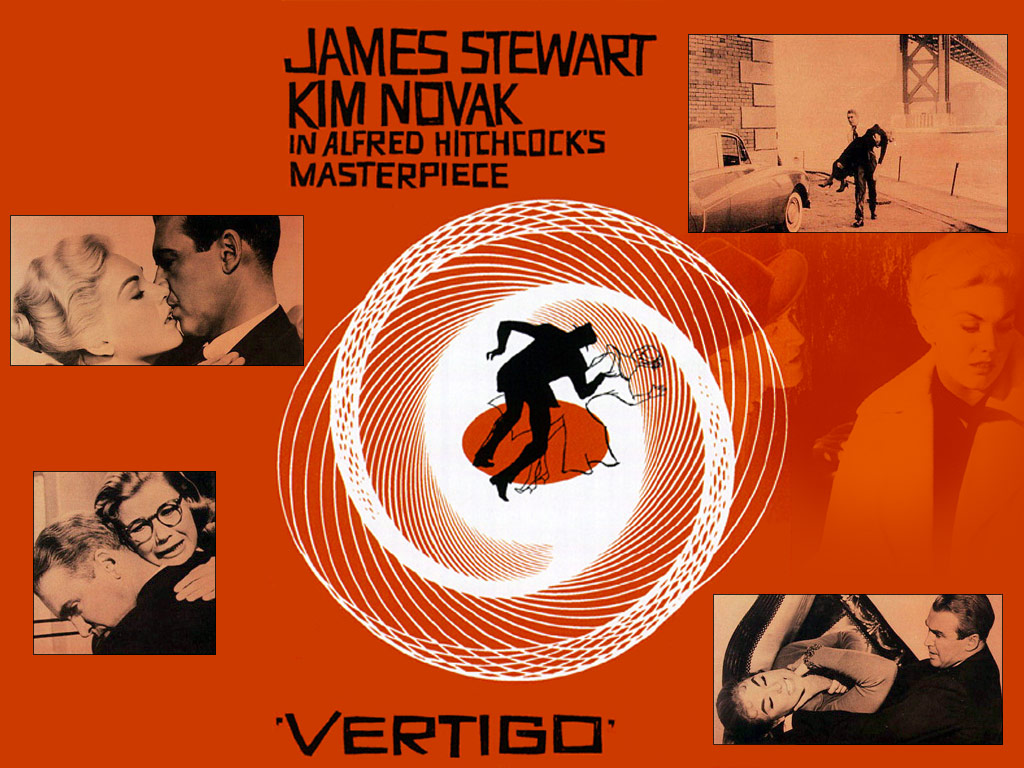
Vertigo topped Sight and Sound's 2012 poll
At first I was pissed off. Then I decided to write an angry response to it. And then I thought about it for a bit and now I'm ok again. What on Earth am I talking about? The Sight & Sound Poll of course. I was all prepared to come out all guns blazing and talk about how this poll was as meaningless as any other poll and how film critiscm is just opinion and can never be fact. And while I still think that is all true, it's not really doing me any good to just rant about these things. So instead I've made a top 50 list. Here's how it works:


1: I can only pick films not on the current Sight and Sound list
2: I can only pick films I've seen, not ones I think will impress people or ones I want to see (like A Separation from 2011)
3 There is a limit of 2 films per director so I can't "fanboy" too much
4: I will probably leave out great films I really love just because I can't remember them right now. Feel free to shout at me if I do.

So this is an alternative list of 50 films. I'd love to have Taxi Driver, Inception or Citizen Cane in there but I can't and thems-the-rules. Leave any comments at the bottom, feel free to insult me or the list. I can take it. Remember there is no science to this list. It's just a list made by some bloke.

*since completing the list I have finally got round to watching Take Shelter.It's a masterpiece. But I'm too lazy to adjust the list now. It would have made the top 10 though.*

1 City of God                               -   2002- Director: Fernando Meirelles
2 A Prophet                                  -   2009 - Director: Jacques Audiard
3 Schindler's List                          -  1993 - Director: Steven Spielberg
4 The Shawshank Redemption     -  1994 - Director: Frank Darabont
5 Children of Men                        -   2006 - Director: Alfonso CuarĂ³n
6 Pan's Labyrinth                          -   2006 - Director: Guillermo del Toro
7 Magnolia                                    -  1999 - Director: Paul Thomas Anderson
8 Goodfellas                                  -  1990 - Director: Martin Scorsese
9 Fargo                                          -  1996 - Director: Joel Coen
10 Lost in Translation                   -  2003 - Director: Sophia Coppola

11 Rear Window                           - 1954 - Director Alfred Hitchcock
12 Adaptation                                - 2002 - Director: Spike Jonze
13 There Will Be Blood                - 2007 - Director: Paul Thomas Anderson
14 No Country For Old Men         - 2007 - Directors: Ethan Coen, Joel Coen
15 Up                                             - 2009 - Directors: Pete Docter, Bob Peterson
16 Pulp Fiction                              - 1994 - Director: Quentin Tarantino
17 Memento                                   - 2000 - Director: Christopher Nolan 
18 L.A Confidential                       - 1997 - Director: Curtis Hanson
19 Network                                    - 1976 - Director: Sidney Lumet
20 One Flew Over the Cuckoo's Nest 1975 - Director: Milos Forman

21 Casablanca                                - 1942 - Director: Michael Curtiz
22 Alien                                         - 1979 - Director: Ridley Scott
23 Donnie Darko                           - 2001 - Director: Donnie Darko
24 Toy Story 2                               - 1999 - Directors: John Lasseter, Ash Brannon, Lee Unkrich
25 The King's Speech                    - 2010 - Director: Tom Hooper    
26 Blue Velvet                               - 1986 - Director: David Lynch
27 The King of Comedy                - 1983 - Director: Martin Scorsese
28 The Artist                                  - 2011 - Director: Michel Hazanavicius
29 Life is Beautiful                        - 1997 - Director: Roberto Benigni
30 Blade Runner                            - 1982 - Director: Ridley Scott

31 Fight Club                                 - 1999 - Director: David Fincher
32 Zodiac                                       - 2007 - Director: David Fincher
33 Eternal Sunshine Of The Spotless Mind - 2004 - Director: Michel Gondry
34 12 Angry Men                           - 1957 - Director: Sidney Lumet
35 The Wrestler                              - 2008 - Director: Darren Aronofsky
36 Singin' in the Rain                     - 1952 - Directors: Stanley Donen, Gene Kelly
37 The Dark Knight                        - 2008 - Director: Christopher Nolan
38 Back to the Future                      - 1985 - Director: Robert Zemeckis
39 American Beauty                       - 1999 - Director: Sam Mendes
40 Ed Wood                                    - 1994 - Director: Tim Burton

41 Trainspotting                              - 1996 - Director: Danny Boyle
42 The Usual Suspects                    - 1995 - Director: Bryan Singer
43 All The Presidents Men              - 1976 - Director: Alan J. Pakula
44 Heat                                            - 1995 - Director: Michael Mann
45 Requiem For A Dream               - 2000 - Director: Darren Aronofsky
46 The Graduate                              - 1967 - Director: Mike Nichols
47 Annie Hall                                  - 1977 - Director: Woody Allen
48 Edward Scissorhands                 - 1990 - Director: Tim Burton
49 Gladiator                                    - 2000 - Director: Ridley Scott
50 Hero                                           - 2002 - Director: Yimou Zhang

Tuesday, 17 July 2012

Batman: A True Cinematic Event

Batman knows how to put on a show
The Dark Knight Rises will be the cinematic event of my life, of that I have no doubt. For all I know I might not even like the film but there is no doubt that this film, above all overs, is the one that I have cared most about leading up to its opening. The fact I am getting a 6:40am train so I can get to the first screening near me says it all. This is my Empires Strikes Back. This is the one I have been waiting for.


The wait for this film started fours year ago. Immediately after The Dark Knight had finished and left a very big impression with me. Much of the praise for that film went to Heath Ledger for his magnificent portrayal of the Joker. But after his sad passing there were immediate doubts about Christopher Nolan making another Batman film. Would Nolan walk away? Would he re-cast the joker? Was the Riddler the obvious choice for the next villain? Doubt hung over any possible sequel like a dark shadow over Gotham City.

Fast forward fours years and all those questions have been answered. Nolan is back. There will be no mention of the Joker. And it's Bane and not Riddler who will take on Batman in the final instalment of this groundbreaking trilogy. Reviews are starting to go up online (I'm avoiding them if at all possible) and the early word is that it's a classic. We can only hope it is. But with 3D failing to enthuse the general public like it promised to do after the release of Avatar, will The Dark Knight Rises prove to be the cornerstone of big action movies for this generation? The Avengers was fun and enjoyable. But this promises to be so much more. This could be the defining cinematic experience of my young movie going life up to this point. No pressure then Mr Nolan.

Sunday, 1 July 2012

Juno - A Sea of Love

*this review contains some spoilers, please watch the film in advance of reading this*

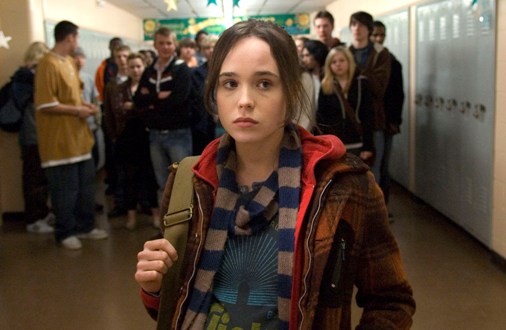
Juno feels the eyes on her at school
Rarely in recent film memory has a movie proved so much fun and combined that sense of joy with characters that you grow to love and care for like a lifelong friend. Juno, directed by Jason Reitman, is a wonderful film because of the evolution of the characters and of the narrative. As Roger Ebert commented on his review of the film "it begins with the pacing of a screwball comedy and ends as a portrait of characters we have come to love."

Juno tells the story of a 16 year old highschool girl named Juno MacGuff (Ellon Page) who upon choosing her close friend Paulie (Michael Cero) as her first sexual partner, falls pregnant. After informing her best friend Leah (Olivia Thirlby) of her unwanted medical condition, Juno decides that abortion is the best choice of action. "I'm going to go to Women Now, just cause they help out women now." informs Juno. It's a throw away line but one that sums up the film and the screenplay written by then unknown writer Diablo Cody. The film is full of brilliantly witty one liners and razor sharp observations. Some critics argued that teenagers don't actually speak like this. I can 100% confirm they do. When we're young we don't have the kind of filter on our language that we do when we grow up. We want people to know we are insightful and funny. Juno is both of those things.

On her way into Woman Now, Juno has an encounter with an anti abortion protester and fellow highschool student. She informs Juno that even in the womb, babies have fingernails. This new piece of information seems to throw Juno. There is a real life person inside her. Minutes later she is running out of the abortion surgery and into the Pennysaver ads. Adoption is her decision and Vanessa (Jennifer Garner) & Mark (Jason Bateman) are the parents to be. Vanessa, the warm hearted, natural born mother, Mark the cool guy, failed musicians who still has dreams of making it big. They seem the perfect couple. Later we find out that's not the case.

Before Juno meets up with the adoptive parents though, she has to tell her parents. In many films about teenagers and pregnancy, the parents are two dimensional. Not here. Rather than having a father who shouts at her or tries to kill the boy who knocked her up, her dad (J.K. Simmons) responds with " I didn't think he had it in him.". Later when the parents are talking alone, her step mum (Allison Janney) knows this wasn't a case of a pushy boyfriend trying to force sex on Juno "You know, of course, it wasn't his idea."

Juno grows ever larger as the film goes on. Her relationship with Paulie becomes more difficult. He likes her, she is confused and scared about her feelings for him. There is a connection there that Juno is scared to admit to. She might be having his baby, but she isn't ready yet to give into her feelings for him.

Meanwhile the parents to be are having problems of their own. While Vanessa worries about what shade of yellow to paint the babies room, Mark worries that he is not ready to be a dad. Is he really about to give up his dream of being a musician? For him, that part of his life isn't over and in a beautifully observed scene where he and Juno are dancing (and perhaps becoming a little bit too close without ever actually doing or saying anything inappropriate) he admits to her that he is going to leave Vanessa.

The film plays out beautifully and by the end you have grown to love the characters you see before you. Jennifer Garner in particular gives a heartbreaking performance of a mother to be waiting for a child of her own. She conveys such sadness when she puts her head to Juno's stomach to hear the baby kick only to be rewarded with no sound. You believe that this is a woman desperate for that connection that only comes with being a parent.

All throughout the film, music plays a large part of telling the story and connecting characters. There are two very different musical scenes involving Juno and Paulie that play out at the end of the film. The first one uses Cat Power's cover of Sea of Love (originally by Phil Phillips) as Juno lays in bed crying after the birth, being cuddled by Paulie. The music fits the scene beautifully and established the film as a true classic. It can be very hard for comedies to get the line between funny and serious right. The fact the film transforms these characters before your eyes without you ever noticing should not be underestimated. You'd have to have a heart of stone not to feel something watching Paulie comfort the girl he loves as she cries in his arms.

The second of these musical scenes is the final one of the film. It involves Juno and Paulie sitting on the steps of his house. They are together and they are happy. Juno is a film that is sweet, funny, beautiful, sad and joyful in equal measures. In 2007 Diablo Cody and Jason Reitman created not only of the most original female characters in recent film history but also a rare film that will appeal to a universal audience. This is no more just a film for teenagers than The Artist is a film for old people or Toy Story is for small kids. Juno will continue to live on because it's unique.

I remember the first time I saw it. I was surprised by just how touching it was and how well drawn the characters were. I wasn't expecting that. The film is a lot fun but it's so much more than just a comedy. I have no doubt that people will keep coming back to this film year after year, I'm also positive that it will continue to draw in new generations of fans in the decades to come. It's very easy to drown in the sea of love that is Juno.

Lost in Translation - I Don't Care If You "Don't Get It"

"Look, nothing is happening!"
"Nothing happens in it." "There's no story." "It's just Bill Murray walking around for two hours."

These are just some of the statements I've heard from people when discussing Lost in Translation. I have a lot of friends and acquaintances who love film and TV just as much as I do. Some are sci-fi geeks. Some love action. Others love comedy. For a lot of these people, Lost in Translation is a nothing film. Well I don't care what they say, I love  it and I'm not alone.


A quick look at Rotten Tomatoes and you'll see that it was one of the highest ranking films of that year for critics. Is it just a critics film? Is it stuck up and snobby? Is it just for people who like to use films to look down at people? I honestly don't think it is.

The film revolves around two lost souls in the alien city of Tokyo. Bob (Bill Murray) is being handsomely paid to shoot a whiskey commercial but he'd rather be doing a play or something more worthwhile. His wife is at home with the kids. She sends him carpet samples for him to look over as he sits alone in his hotel room. Charlotte (Scarlet Johansson) has recently married a photographer and she has accompanied him to Tokyo while he shoots a band. She knows virtually no one there and her husband doesn't seem to want her around his work. Both Bob and Charlotte are stuck. In their lives and in their marriages.

This sets up the basic principle of the film. Upon their chance meeting in an elevator (he notices her, she doesn't notice him) and then again at the bar of the hotel, the loneliness of their lives and of the surrounding city soon draws them closer. But non in a sexual way. That is not what their relationship is about. They can be intimate. They can share a look, or hold hands but it's not about sex. It's a connection between two lonely people. Somehow they feel they can share more with a stranger than they can with a spouse.

Much of the film revolves around their relationship over the short time they spend together. From singing karaoke to a visit to the hospital. But to simply to describe what happens in the film is to miss the point entirely. This isn't a film about plot, it is a mood piece that relies on the subtlety of the actors. The smallest of glances they make can say more about the characters than 20 pages of rip roaring dialogue in a Tarintino film. Bill Murray does more than simply play a character similar to his own persona in real life. He creates a whole new life that looks like it has fully lived its 50 plus years on this earth. We are not seeing a character in a film, we are seeing a few days in the life of a real person with a real life outside of this motion picture. Or so it seems, such is the quality of Murray's acting.

Sofia Coppola wrote and directed Lost in Translation for which she won the Academy Award for Best Original Screenplay. There are moments in the film where you can't imagine the scenes could have existed if she didn't have the actors around her that she did. Would the film have worked as well if Bill Murray wasn't in it? No it wouldn't. But that's not to detract from her creation. She did after all create this world for both actors to play in. One memorable scene in the film is after Bob and Charlotte have had a fight. Well not so much a fight. There was no raised voices, just disappointing looks.  The next morning as they sit in near silence in the restaurant, Charlotte makes a quip aimed at Bob for actions the night before. Bob's response is cutting.

"Wasn't there anybody else to lavish attention on you?"

The final scene between the two was not originally in the screenplay. Instead Bill Murray suggested the scene to Sofia. It was a simple scene but one that stole the show. Bob is the on the way to the airport. As his car is driving along he spots Charlotte in a crowd on the street. He gets out the car, makes his way over to her and they embrace. A hug, not a kiss. The film never set out to make these people fall in love and the avoidance of the kiss is key. It would have betrayed what goes before it if those two were forced into a fake romantic embrace. Instead we get two lonely characters hugging and sharing something. What they share, we don't know. It's not our place to know. Bob whispers in her ear but the camera doesn't pick it up. It's left up to us to imagine for ourselves what was said. It's just another reason why I love the film.

It would have been so easy to have these two characters spill their guts and have them have a big romantic moment where they describe their love one another. But they never do. Yes there is a small kiss at the end of the scene, but it's not romantic. Or at least not to me it isn't. It's two souls saying goodbye. I'll allow the film that.

Every time I watch the film, as "Just Like Honey" by The Jesus & Mairy Chain plays as the characters drift apart for one last final time, I'm left with the same feeling I had the first time I watched the film. I am content. This film soothes me in a way no other film does. I put it on when I need to think or when I just want to say hello to two of my favourite characters in recent film memory. It doesn't bother me in the slightest that some people don't get the film. I do and that's all that matters. Of course it's always nice when your opinion is shared by others. Thankfully on this film, Roger Ebert and I see eye to eye. 

I don't always agree with Mr Ebert, but I always respect him. He can make valid points of criticism or praise that I might not agree with, but that are at least worth thinking about. In his reviews of Lost in Translation (linked below) he comes as close to anyone as ever done in disproving my theory that reviews themselves can't be art. Here's a man who loves this film as much as I do. And we don't care if you don't like it.


*There may be small spoliers in the reviews, please watch the film first*

Saturday, 30 June 2012

Film vs Digital

Digital is the future of cinema. Or so we're told. It seems that with film studios and production companies wanting to cut costs, especially with the dwindling sales of DVD'S and the increase in film piracy seemingly damaging their deep pockets, films on film is a dying concept. For some, myself included, this is very sad news indeed.

I remember the exact moment which made me decide that I would always be a champion of film over digital. It was during the trailer for the very forgettable Public Enemies (a film so forgettable I had to look the title up on IMDB.) A drama set around criminal activity in 1930's America that starred Johnny Depp and directed by Michael Mann. There was just something not right in the images I was looking at on my laptop. The film its self didn't look bad but the quality of the images just weren't correct. They weren't out of focus or badly framed, they just weren't right. What was wrong with the footage was that it didn't look like a film. It looked like the behind the scenes footage of a film you get in DVD extras. It had no substance to it. In short, it just wasn't film.

After going to see the film in the cinema a few months later, the same problem resurfaced, only this time it was 100 times worse. While the acting, writing, direction and narrative all had problems, the real problem for me was the digital look of the film. I just couldn't engage myself in the action or lose myself in the story. I was very aware that I was watching actors rather than engaging with characters.

Now I must clarify before I go any further, I'm not against the digital format. I believe both digital and film should be available to film makers and depending on the subject and the individual film maker, they should be able to choose the best look for their particulate project. I was just surprised when I first saw the trailer for Public Enemies that Mann had decided to go down the digital route since it was a period piece. I wanted to lose myself in celluloid within a beautifully realised vision of a time I will never experience in any other form other than on the big screen. Instead with digital footage I was left cold and distance from the action on the big screen in front of me. Mann had previously had success with the digital format with Collateral (and also Miami Vice but that's maybe best forgotten).  The clean, crisp look that digital offered Collateral suited the the feel of the film and the mood of its characters within its night time setting. L.A. was the star of that film and the digital photography was one of the reasons for that.

Collateral is by no means alone in being a beautifully shot digital film. Drive for instance looked great. As did Hugo. Both films were shot on the Arri Alexa, a digital camera that aims for the look of film. The Avengers was shot on the same camera, though I was less keen on the look of the images achieved in that film. Though it certainly didn't have the image problems I felt Public Enemies had.

Smaller hand held digital cameras are of course a big part of film making, especially for smaller productions with lower budgets. Danny Boyle has had great success shooting with smaller cameras. For Slumdog Millionaire he used the SI-2K Digital Cinema Camera to shoot around the crowded streets of India. Darren Aronofsky went hand held for The Wrestler with the RED and once again the film was a huge success. It's not that digital can't be great. It's that it shouldn't be the only option for future film makers.


One of the last few champions of celluloid is Dark Knight Rises director Christopher Nolan. 

"I want to work with the best possible image quality, and that's film. Film has the most range, the highest resolution by far. But you won't hear that, because there's no money in sticking with the old format."

Nolan is adamant that film needs to stick around. He is not advocating that film makers shouldn't use digital, only that they should have the choice to use whatever format they feel is best for them.

Nolan is also fighting the good the fight in another format war that is raging right now. Since James Cameron and his hugely successful Avatar redefined the 3D cinema experience, Hollywood has not looked back in embracing this new technology. Steven Spielberg and Martin Scorsese have both made family films in 3D and said they are open to using the format again on future projects. Though Scorsese has decided to go back to 2D for his next project, The Wolf on Wall Street. It's only a shame it won't be shot on film, with Scorsese opting for digital instead.

3D, even more so than digital, is being presented to audiences not as a money making opportunity for the studios, but as a technical advancement that improves a film by adding new dimensions to a film that can't be achieved with 2D. 

“It’s like a leap from standard definition to high definition,” said Michael Lewis, who co-founded RealD, the makers of the 3D projection system used in most cinemas, as well as stereoscopic cameras.

Once again, Chris Nolan is not convinced. He argues that IMAX and not 3D is the future of cinema. Or at least it should be. Nolan shot parts of the Dark Knight with the 65mm IMAX camera and turned to it once again for The Dark Knight Rises with over an hour of footage shot in the larger format for the final instalment in his Batman trilogy. He argues that film is already 3D and that Stereoscope adds little to the visual dynamic of the film. He feels that 3D technology gives an individual experience that is better suited to computer games and immersive technologies and detracts from the viewing experience of a film.

He is not alone in his reservations with 3D. British film critic Mark Kermode is very vocal in his views against the technology. As he sees it, 3D dims the the image on screen and distances the audience from the film due to the use of 3D glasses.

Many people also believes it is more of a financial decision than an artistic one. The increase price of tickets for 3D films certainly makes a different at the box office but it is the fight against piracy where 3D really comes into play. Simply recording a 3D film and posting it online doesn't work. The studios are turning to 3D as the answer to piracy. Perhaps it is. Perhaps until people have the choice to stream the latest releases on their computers or TV's, piracy won't go away. That's if it ever does.

So with digital and 3D such an established part of Hollywood, just what hope is there for traditional celluloid film making? Well while digital might be becoming industry standard, we should certainly have film around for a few more years yet. Christopher Nolan is now once of cinemas most powerful brands. His reputation with films such as Memento, Inception and the Batman trilogy have given him the kind of power at Warner Brothers that allows him to make the biggest film of the year in 2D IMAX rather than digital 3D. Nolan himself admits the studio bosses would have loved him to go for 3D.

For me, film is still my preferred format. I love the look of it and depth it gives the picture. I don't consider myself sentimental or old fashioned for wanting to keep this format alive and in the mainstream of film making.Yes digital has many positives and is a more flexible format that can offer different possibilities to the men behind the cameras. But that's exactly what it should be. It should be an alternative to film, it should compliment it. It shouldn't be replacing it. I'll leave the last word to Chris Nolan.

"The danger comes from filmmakers not asserting their right to choose that format....If they stop exercising that choice, it will go away. I tell people, 'Look, digital isn't going away."

*next on my blogging to do list, CGI vs in camera effects/stunts*

Wednesday, 27 June 2012

Blue Valentine - You Always Hurt The One You Love

Some films are easier to sell to a mainstream audience than others. Romantic comedies are generally considered safe ground for a film studio with their warm, light, fluffy story lines and happy endings making them easy to market. Blue Valentine certainly isn’t a romantic comedy. And neither is it an easy watch. It is however a raw, emotionally powerful (and often emotionally draining) dissection of a marriage staring Michelle Williams and Ryan Gosling.
The film follows a non linear narrative, jumping in time between the start of their relationship and it’s ultimate demise with brutal honesty and lack of Hollywood gloss. It is a slow burning and unrelenting journey into the world of two people who see their views on love and on one another change as the film progresses.


Blue Valentine - A modern reworking of Scenes From A Marriage (1973)


Blue Valentine owes much in style and content to Ingmar Burgman’s 1973 work Scenes From A Marriage. They share a similar uncompromising look at love. And the intensity that both movies aim for between their main characters lead to some of the most uncomfortable scenes ever captured on film. The scenes are slow burning and unrelenting and remind you of the power that is available from a scene that shows two people falling out of love. Like Burgman at his best Blue Valentine isn’t afraid to risk alienating it’s audience in order to delve deeper into the lives of the two main characters. The film is also reminiscent of the 2006 Australian film Candy which looked at the break up of a relationship but through the eyes of two drug addicts. Though in Blue Valentine there is nothing as remarkable as drug addiction to separate and destroy a young couple in love, instead that is left to unravel by its self.

Blue Valentine’s real trump card is the actors and their ability to convey so much using so little. Throughout the film it is often the moments with little or no dialogue that are the most effecting for the viewer. For added realism and a deeper connection between the two actors Derek Cianfrance, the director of Blue Valentine, rented a house together for them and instructed them to live together as if they were a true couple.

Derek Cianfrance tries to play the film as straight down the middle as possible with both characters shown as flawed individuals who shared a love for each which is now dying. And it’s because that they are both flawed that the film works. Gosling’s character Dean is the romantic of the two but he is someone who lacks ambition and decides to go after a job painting houses as it’s an easy lifestyle that allows him to drink at work and save all his energy for their daughter.
“I didn’t want to be somebody’s husband and I didn’t want to be somebody’s dad, that wasn’t my goal in life. But somehow it was. I work so I can do that.”

William’s character Cindy is the hard working nurse who is the bread winner of the household and also the emotionally colder character of the two. She is fed up with her husband drunken state and having to be the bad guy with their daughter in order to keep some sort of order in the house. It would have been easy for the film to pick sides but it’s to Cianfrance’s credit that he holds it together in an even handed manner so well.

The film has been criticized by some for lacking pace and for not being clear on the pitfalls that ultimately break the couple up. But that is indeed the point of the film. You can’t always pinpoint the moment when a couple starts to drift apart. Blue Valentine is indeed a hard watch, but it’s a good film because of that. By the final scene you might wish you hadn’t just sat through such a heartbreaking examination of a couple and surely that’s the biggest compliment you can pay the film?

*Please note this review is taken from a previous Tumblr account I set up to publish reviews for my university course "Cinema and Society"*

Welcome To My Blog


Eisenstein knew a thing or two about film
Hopefully over the coming weeks and months I will be posting some reviews and thoughts over some films that hold a special place in my heart. Some will be outright classics, others maybe less known or less loved by a wider audience. Every post will be open for discussion and I  hope to link in other sites, reviews,pictures and video to help expand this blog futher.

I have never considered reviews of anything or any kind as art. They're not (though a few reviews are pretty close). I have not seen every film ever made and I don't conisder myself to be the next Roger Ebert. I am just a recent uni graduate with a love of film and a wish to share some thoughts on some of the films that have brought a lot of joy to me over the years.